Table of contents
Open Table of contents
What the role actually is
Strip away the hype and the definition is unglamorous. A forward deployed engineer — FDE — embeds inside a customer’s organization, learns their systems and their broken workflows from the inside, and builds production software there, under the same constraints the customer operates under. The load-bearing distinction, the one that separates this from the dozen adjacent titles it keeps getting confused with, is simple: an FDE writes and ships code; a solutions architect designs a system and hands off a document. One produces a deployment. The other produces a deck.
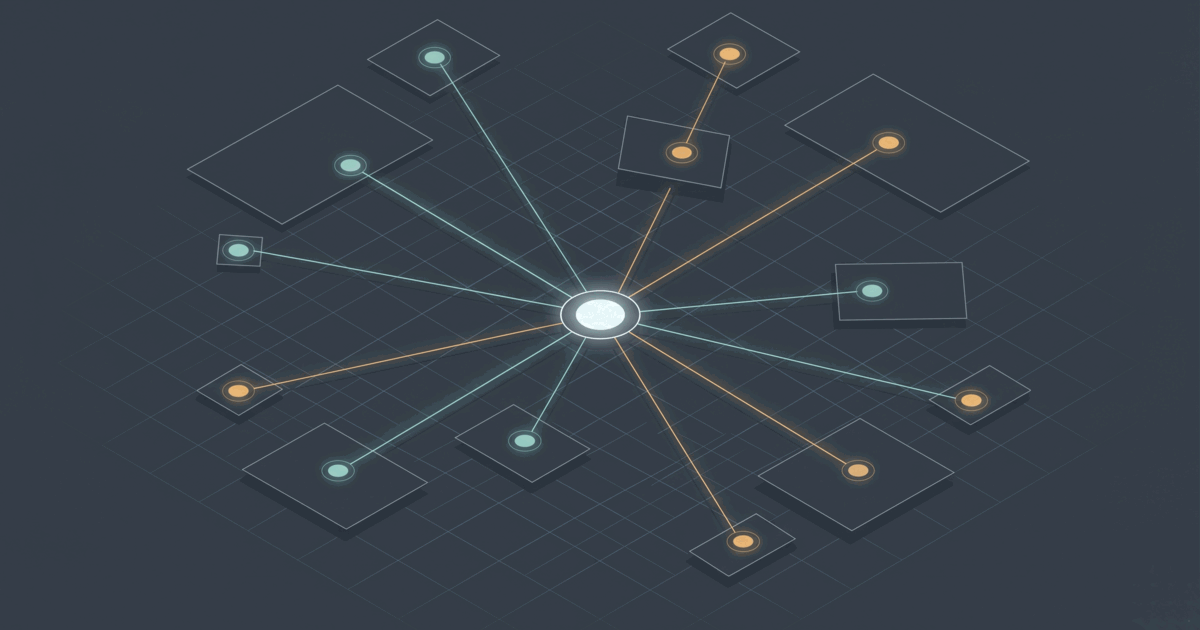
Palantir’s own internal framing is the cleanest articulation I’ve found, and it’s worth holding onto because it explains the whole boom. Their product engineers were “Devs,” focused on one capability, many customers. Their forward deployed engineers were “Deltas,” focused on the inverse: one customer, many capabilities.
The two orientations Palantir built its engineering org around — and the axis the AI labs are now hiring along.
Former Palantir and OpenAI exec Bob McGrew put the relationship between the two in a line that has stuck with me: the FDE’s job is to “build the rough gravel road,” and the product team’s job is to “turn that into a paved superhighway for the next ten customers.” The FDE goes first, into terrain the product doesn’t cover yet, and finds out what the road even needs to be.
Why every AI lab suddenly needs one
Here’s the part that should make anyone building with AI sit up. The labs are not hiring FDEs as a sales convenience. They’re hiring them because the labs have discovered, at scale and with real money on the line, the same thing I keep circling back to on this blog: the model is the easy part now.
Anjor Kanekar of PostHog frames it precisely — “AI companies have a gap between foundational model capabilities and enterprise applications where they add value.” The frontier model is astonishing in a demo and inert in a Fortune 500. Between those two states sits an unglamorous wall: the model has to talk to a customer’s legacy SQL databases, survive their OIDC/SAML authentication, respect their data-residency rules, and slot into a workflow that 10,000 people already do a particular way for reasons nobody wrote down. That integration wall is where most AI projects quietly die — not because the model was bad, but because nobody bridged it to the place value actually gets created.
The FDE is the bridge, hired. And the labs are not subtle about it. OpenAI began building its forward deployed team in late 2024, paying mid-level engineers in San Francisco $160K–$280K to “lead complex deployments of frontier models in production… where model performance matters, delivery is urgent, and ambiguity is the default” — and in May 2026 it formalized the motion into a majority-owned joint venture it literally named The Deployment Company. Anthropic’s Applied AI group sends FDEs into customer systems to ship the production scaffolding — MCP servers, sub-agents, agent skills — that turns Claude from an API into something woven through a company’s actual work. Read across the postings and the labs are all saying the same thing in unison: the future of AI adoption depends on deployment, not on the next point of benchmark improvement.
That’s the admission. When the companies with the best models on earth conclude that their growth constraint is integration labor, they are telling you, in the most expensive way available, that capability stopped being the bottleneck a while ago.
This is the same thesis, wearing a lanyard
I’ve written some version of this point twice already, and the FDE boom is the labor market confirming it in public.
In The Speedup Trap, the argument was that AI made writing code faster — the one part of engineering nobody was actually stuck on — while leaving the hard part, knowing whether a change fits the specific shape of the specific system it’s going into, exactly as hard as before. The forward deployed engineer is that hard part promoted to a job title. The entire role is “fit this to the specific shape of this system,” performed on-site because the shape can’t be understood from a distance.
In The 20% Who Actually Make Money on AI, the single most actionable number was that companies which redesigned their workflows around AI got 2.7× the ROI of companies that bolted the same tools onto their existing process. I argued the gains live in the wiring. Well — the FDE is the person doing the wiring. When First Round describes the best forward deployed work, it sounds identical: the highest-value deployments come from someone who embeds deeply enough to redraw the workflow, not someone who installs the product and leaves. Jake Stauch, who runs an FDE-heavy startup, describes the goal as reproducing “the early co-founder energy where your CTO hears feedback directly from the customer and immediately fixes it.” That’s a workflow-redesign loop with the latency taken out.
So the FDE boom isn’t a separate trend from “most AI pilots fail” and “the gains are in the integration.” It’s the same fact, observed from the supply side of the labor market. Companies are paying $280K and equity for humans to stand in the gap between a capable model and a working deployment, because that gap turned out to be the whole product.
When it actually makes sense — and when it’s a trap
None of this means every company should go hire forward deployed engineers, and the most useful corrective I found comes from First Round’s field guide to the role. The economics only close under three conditions: you’re selling to big-fish customers with contract values large enough to absorb months of on-site engineering; your product is still flexible enough that discovering new use cases is an asset rather than a distraction from a fixed roadmap; and your customers’ needs are genuinely diverse, so a cookie-cutter implementation won’t do. Looker’s former CEO Frank Bien put the discipline bluntly: “If you’re confident in your model, you can do the math and find out.” If the math doesn’t close, an FDE is just an extremely expensive consultant you’ve miscategorized as software.
The skeptic’s case never fully went away, either, and it’s worth stating honestly rather than waving off. Hire the wrong kind of FDE and you can burn four to six months discovering it. Candidates take the role and quietly wonder whether they’re an engineer or “a glorified consultant with a git commit history.” Founders imagine a single mythical operator who builds the product, implements it, trains the customer, and keeps everyone happy — a fantasy that collapses the moment you have more than a couple of accounts. The role is real and it is powerful; it is also a magnet for muddled thinking about what you’re actually hiring for.
And the people who are great at it are genuinely rare, because the job is a contradiction in trench-coat. First Round’s interviews keep surfacing the same profile: a real engineering bar — these are people who “could have gone on to become a staff engineer at a top tech company,” not sales in disguise — fused with a “willingness to eat pain,” a compulsion to build, and enough business curiosity to get energized by someone else’s domain. Palantir’s recruiters found early-career generalists often outperformed specialists, precisely because they hadn’t yet learned which problems are “not engineering’s job.” The best FDE stories, one ex-Palantir recruiter noted, “had nothing to do with the core product offering” — they came from someone close enough to the customer to see a problem the product team couldn’t have known to build for.
The verdict
It’s tempting to read the forward deployed engineer as a fashion — a title that’s hot this cycle and will cool next one. I think that misreads it. The title may well cool; the underlying fact won’t. The fact is that we have entered a period where the scarce resource in AI is not model capability but the human judgment required to fuse a capable model into the messy, specific, undocumented reality of an actual organization. The FDE is simply the cleanest expression of that scarcity the market has produced so far.
If you’re an engineer wondering where the durable work is as the models get better at writing code, this is the tell. The work that’s getting more valuable is the work the model can’t do from a distance: understanding a system from the inside, owning a problem end-to-end, and building the gravel road across the gap that capability alone never crosses. The labs have already voted with their headcount. The forward deployed engineer isn’t the hottest job in tech because the role is new. It’s the hottest job in tech because everyone finally admitted where the hard part was.